Participant safety starts well before the gun goes off
Multi-point monitoring along your courses and flying sites, early alerts, a documented history for your safety obligations.
The outdoor organizer's liability: a responsibility you can't improvise
Organizing a mountain trail, an urban marathon or a triathlon means taking on real responsibility for the safety of hundreds or even thousands of participants. That responsibility is all the more complex because outdoor courses unfold over kilometres of sometimes rough, exposed terrain that is hard for rescue teams to reach.
Cloud-to-ground lightning strikes detected in France in 2024, with a July peak exceeding 100,000 monthly strikes. June, July and August concentrate most of the electrical activity (source: Météorage, 2024 annual report).
People doing outdoor sports in summer are a particularly exposed group. About 70% of lightning-strike survivors have long-term aftereffects according to the available medical data. For an outdoor-event organizer, these figures define the real stakes they must address with concrete measures.


The features of outdoor events that complicate storm management
A course spread over dozens of km
Some participants are on exposed ridges at 2,000 m, others in forest, others near an aid station. Risk exposure differs radically depending on the position along the course.
A moving crowd
On a trail, some participants are 20 km from the first aid station. If a storm arrives, their only option is to take a safe position on the terrain.
Free flight: the danger comes before the cloud
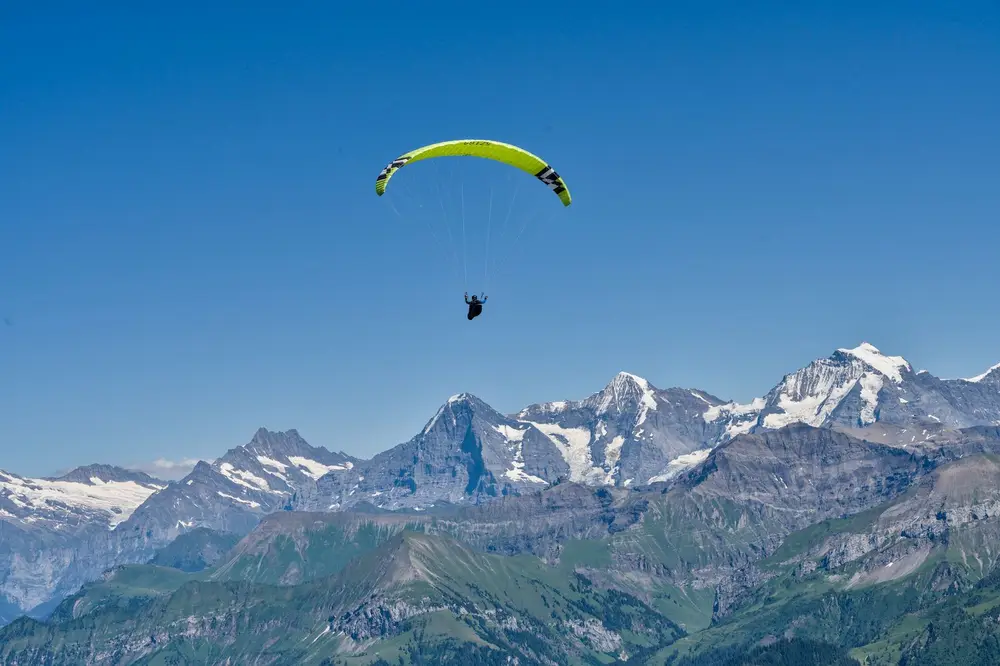
In paragliding and hang gliding, the gust front runs tens of minutes ahead of the cell, and the suction under a developing cumulonimbus shows up before the first drop of rain. Closing the take-off when the cloud becomes visible means deciding too late.
Areas with no network coverage
On many mountain courses, mobile coverage is nonexistent. The only way to manage this risk is to make decisions before participants leave the points where they can be reached.
How Storm Predict fits into organizing an outdoor event
Several days ahead: calibrating the safety plan
Monitoring the weather forecasts over the course's critical areas lets the organizer prepare their scenarios. A deterioration forecast for the afternoon of race day leads to building the matching safety plan: an earlier start, a shortened course available, identified stopping points.
On the day: real-time tracking for race control
The safety manager tracks the situation in real time on the Storm Predict dashboard, from their mobile command post. At any moment they know which areas of the course are in the risk window, whether an identified cell will hit the ridges the leading participants will reach in 90 minutes.
Multi-point configuration along the course
Storm Predict lets you set up several critical points of the course as independent monitoring spots: the start, the most exposed ridges, the areas with no shelter. Alerts are differentiated by zone, which makes it possible to take decisions suited to where participants are.
Flying schools and sites
A flying site is watched at two points that are not exposed in the same way, the take-off and the landing field. Each one can be set up as an independent spot. And the lead time is given for the leading edge of the cell rather than its centre: to bring students back down and pack up, what matters is when the wind turns, not when it rains.
Urban marathons and triathlons
The most critical risk window is the start: all participants are gathered, often in an open space. A precise alert on the start area, with 4 hours of lead time, makes it possible to decide on an earlier or delayed start. Storm Predict suits linear events as well as loop courses.
A court assessing an organizer's liability after a weather incident will look at the prevention process put in place. Storm Predict keeps a timestamped history of the alerts issued, usable to document that process for the authorities and insurers.
Service limits
Storm Predict does not predict the weather with absolute certainty. A confidence index is shown on every predictive trajectory. It does not replace the event's safety plan, the rescue arrangements or the federal regulatory procedures.
Summary of benefits
Storm Predict for outdoor sports
- Configuration of several course points as independent spots
- Alerts differentiated by zone: lightning (exposed ridges), gusts, hail
- Predictive trajectories up to 4 hours
- Real-time tracking from a mobile for race control
- Real-time confidence index
- Timestamped history for post-event documentation
- Suited to mountain trails, marathons, triathlons, ultra-trails
Your participants' safety is your priority. We make it ours too.
Mountain trail, marathon, triathlon, flying site: each format has its own constraints. A 30-minute call to identify the concrete benefits.